Foundation
Scotland
Scotland is one of the four nations of the United Kingdom. Its primary visual foundation is The Saltire — also known as St Andrew's Cross — a white diagonal cross on a blue field, widely used across civic identity, sport, tourism, culture and Scottish representation.
This page collects the primary Scottish asset with practical notes on naming, specification, context, common use and common mistakes.
Primary asset — The Saltire
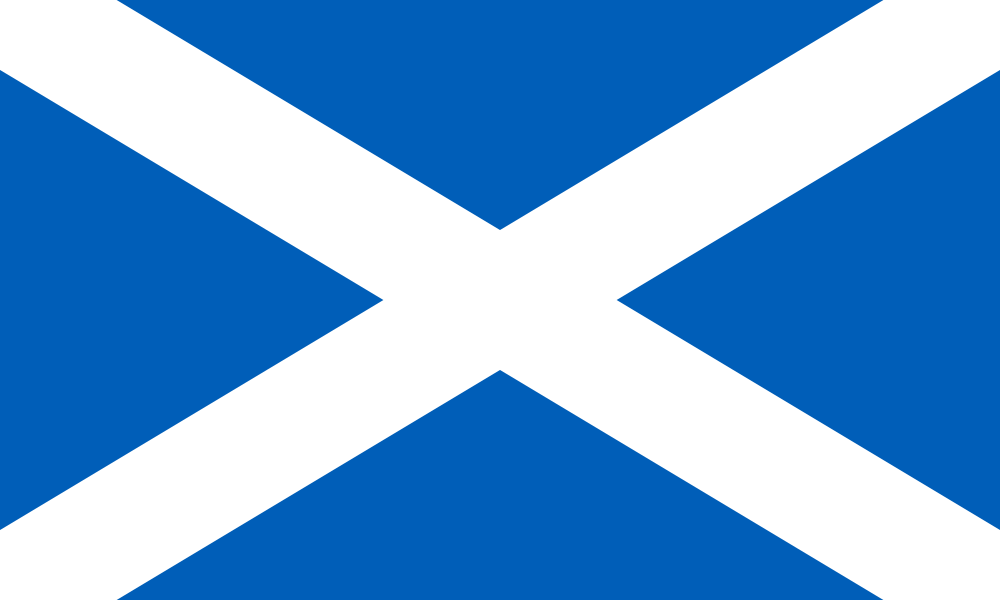
The Saltire is the commonly used name for the flag of Scotland. St Andrew's Cross is the formal heraldic name — both are correct and widely used. The flag represents Scotland specifically and should not stand in for British or UK identity.
Specification and construction
| Asset name | The Saltire |
|---|---|
| Formal name | St Andrew's Cross |
| Represents | Scotland |
| Ratio | Reference asset uses the Flag Institute Registry ratio of 3:5 and Pantone Blue 300. The Scottish Flag Trust Code references 4:5 and Pantone 300U as general guidance, but the Code has no legal status. |
| Blue |
Pantone 300 C · #005EB8 RGB 0, 94, 184 · CMYK 99, 50, 0, 0 |
| White | #FFFFFF · No Pantone specification |
| Saltire width | No single statutory saltire-width specification is confirmed for this reference. |
| Construction | White diagonal cross (saltire) on a blue field. The cross runs fully corner to corner. |
| Statutory basis | The blue was the subject of a Scottish Parliament committee recommendation in 2003 (Pantone 300 C). No single statutory instrument formally specifies the full design. |
Meaning and context
The Saltire is one of the oldest national flags in the world. According to tradition, a vision of a white saltire on a blue sky appeared to the Pictish king Óengus before the Battle of Athelstaneford in 832 AD, inspiring him to adopt the cross as a symbol of Scotland. The historical basis for this story has not been verified, but the association of St Andrew with Scotland is well established from at least the early medieval period.
The flag represents Scotland specifically. It should not be used as a generic substitute for the Union Flag where British or UK identity is intended, nor should it be treated as a generic Celtic or Northern European design cue. It belongs to Scotland.
The Saltire's component from the Union Flag (the white diagonal cross on blue) is easily confused when the flag is seen partially or at a distance. In context, the Saltire is unambiguous, but poor reproductions — particularly with incorrect blues — can undermine its distinctiveness.
Naming and terminology
Scotland is one nation of the United Kingdom.
Scottish is the standard adjective; Scots can refer to people from Scotland or to the Scots language depending on context.
Saltire and St Andrew's Cross both refer to Scotland's flag and are widely accepted terms.
Common usage
Civic representation
Flown by the Scottish Government, local councils and civic buildings. The primary official flag of Scotland.
Scottish sport
Used by Scotland national teams in football, rugby, golf and other sports where Scotland competes separately.
Tourism
Central to Scottish tourism identity and destination marketing — domestic and international.
Cultural events
St Andrew's Day (30 November), Burns Night, Highland Games and other Scottish cultural events.
Exports and Scottish-made
Used on Scottish products to signal Scottish origin or provenance — whisky, food, crafts and manufactured goods.
International contexts
Used by Scottish organisations operating internationally to identify specifically Scottish rather than UK or British identity.
Common mistakes
Using the Union Flag when Scotland is specifically meant. For Scottish sport, Scottish civic occasions or Scottish-specific representation, the Saltire is the appropriate flag.
Using inconsistent blues without checking against the Pantone 300 C specification. Navy or mid-blue reproductions look like different flags and undermine recognition. The Saltire blue (Pantone 300 C) is noticeably brighter than the Union Flag navy (Pantone 280 C).
Stretching or squashing the flag. The diagonal cross should run precisely corner to corner — proportional distortion is immediately obvious.
Cropping the flag so the saltire arms are uneven. The diagonal cross works as a complete, full-field symbol. Partial crops lose its character.
Confusing the Saltire with other diagonal-cross flags (such as those of Jamaica or Burgundy). In context the Saltire is distinctive, but the blue-white combination should be used precisely to maintain that distinctiveness.
Treating the Saltire as a generic Celtic or Northern European styling cue. It belongs specifically to Scotland. Using it decoratively to evoke "Celtic" identity without Scottish context is a misuse.
Provenance and source notes
| Primary source | The Flag Institute — flaginstitute.org |
| Blue specification | Pantone 300 C — recommended by Scottish Parliament Standards, Procedures and Public Appointments Committee, 2003. Also referenced in Scottish Flag Trust Flag Code. |
| Ratio | Reference asset uses the Flag Institute Registry ratio of 3:5 and Pantone Blue 300. The Scottish Flag Trust Code references 4:5 and Pantone 300U as general guidance, but the Code has no legal status. |
| Statutory basis | No single statutory instrument. The 2003 committee recommendation is the closest to an official colour specification. |
| SVG status | Constructed from published specifications. The flag itself is not subject to copyright. This rendering is released under Open Government Licence v3.0 |
| Last reviewed | May 2026 |
Downloads and references
Downloads
SVG uses 3:5 proportions with Pantone 300 C blue (#005EB8), consistent with the 2003 Scottish Parliament committee recommendation.
References
- The Flag Institute Flag specifications, history and guidance
- Scottish Flag Trust Flag Code and proportion guidance
- Flags of the World — Scotland Cross-reference for construction and proportion notes
Related pages
- Foundations indexOverview of all foundation entries and supporting guidance
- LanguageNaming and terminology guidance
- ColoursRelated colour references and context notes
- Assets: FlagsDownload available UK and nation flag files
- United KingdomUK-wide foundation context
- EnglandEngland foundation page
- ScotlandScotland foundation page
- WalesWales foundation page
- Northern IrelandContext-dependent symbol guidance